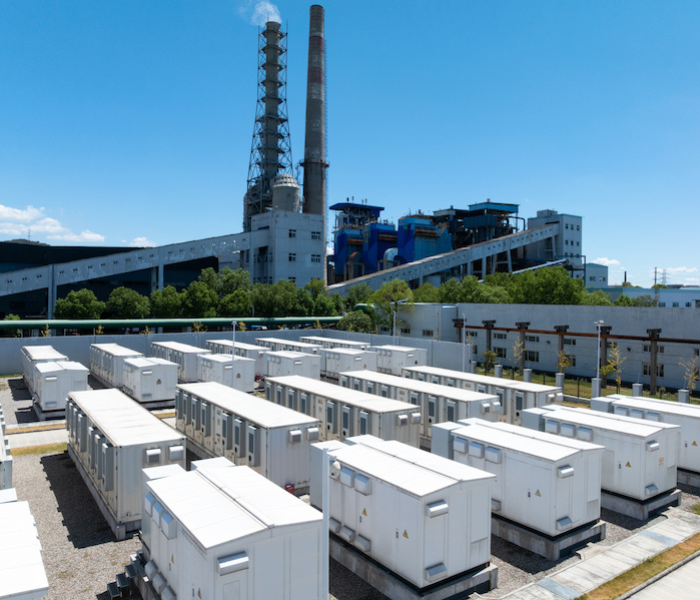
Battery energy storage systems (BESS) introduce a range of hazards that must be understood to inform safe design, operation, and emergency response. Thermal runaway is a key hazard associated with lithium‑ion BESS. It is a self-accelerating, exothermic process driven by internal reactions, which makes it difficult to stop once initiated. The reaction can be triggered by defects, internal faults, or external mechanisms such as mechanical damage, thermal stress, or electrical abuse.
What Happens During Thermal Runway?
Once initiated, thermal runaway can propagate from a single cell through a battery unit and result in:
- Fire and flammable gas generation
- Toxic gas release (e.g. hydrogen fluoride)
- Localised explosion.
UL 9540A, The Standard for Thermal Runaway Testing
Understanding the magnitude of these impacts and their potential to escalate is typically achieved through consequence modelling supported by large‑scale fire testing. Test methods such as UL 9540A, Standard Test Method for Evaluating Thermal Runaway Fire Propagation in Battery Energy Storage Systems, drive the battery into thermal runaway and then assess its fire and explosion behaviour under these conditions. The data collected is used to evaluate:
- Heat release and radiant heat flux
- Gas generation and explosion behaviour
- Fire propagation between units
- The potential toxic products formed
These outcomes can inform facility layout, separation distances, and the provision of fire protection measures, in conjunction with Australian and international standards, such as NFPA 855 – Standard for the Installation of Stationary Energy Storage Systems.
Designing to Limit Propagation and Impact
Mitigating the potential consequences of thermal runaway relies on a layered control framework embedded in both design and operation. As the reaction cannot be stopped once initiated, control measures focus on limiting its propagation between battery units and its impact within the site.
Controls comprise a combination of battery-integrated systems, site-level design measures, and emergency response provisions, including:
- Battery management systems to detect and isolate faults
- Energy management systems to control charging and discharging
- Fire, heat, and gas detection systems
- Separation distances between battery units to limit fire propagation
- Firefighting systems, including an adequate water supply and site access.
Want to Find Out More?
R4Risk undertakes hazard identification and consequence assessments for BESS facilities to support safe design. Get in touch to learn how we can support your next project.