R4Risk Webinars
After the Bowties – the Story Continues
Moving Beyond the Bowtie Workshop
Turn Bowtie Outputs into Real Risk Reduction
This webinar picks up where a bowtie analysis workshop leaves off, tackling the critical question: what do you actually do with your bowties once they’re built?
Presented by Belinda Beale, Senior Risk Consultant at R4Risk, the session provides a practical framework for turning bowtie outputs into meaningful and sustained risk reduction outcomes.
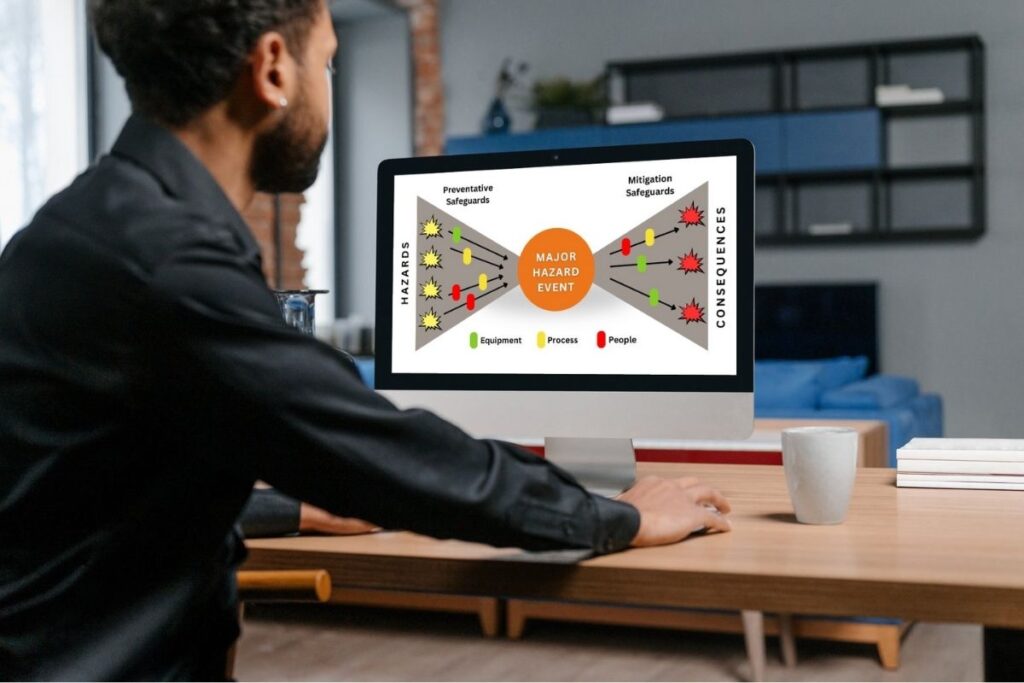
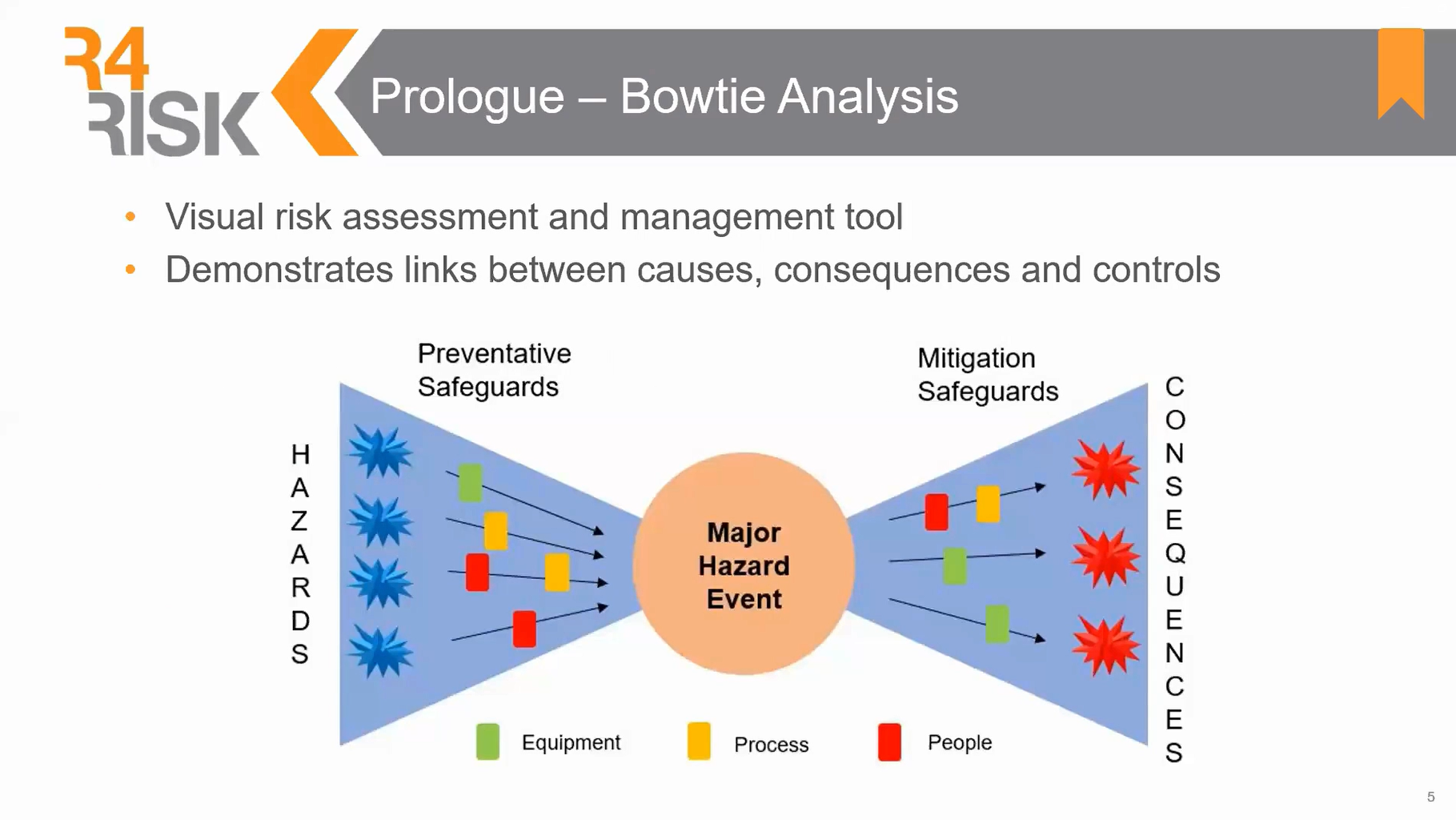
The webinar begins with a brief refresher on bowtie foundations, introducing bowtie analysis as a visual tool linking causes, consequences and controls around a top event. A well-constructed bowtie is accurate, logical and uncluttered – producing valuable outputs such as relative frequency data, control inventories and risk ratings.
However, the central message is clear: the real value of a bowtie lies not in the workshop itself, but in what happens afterwards.
To address this, the session is structured around four key chapters:
- Risk Reduction Actions – identifying and implementing targeted measures to reduce risk
- Control Management – defining ownership and maintaining integrity of controls
- Performance Monitoring – tracking effectiveness and identifying degradation over time
- Communication – embedding bowtie insights into site understanding and decision making.
Together, these elements form a practical roadmap for embedding bowtie analysis into day-to-day operations.
After the Bowties - the Story Continues
Key Takeaways
- Building a good bowtie is only the starting point – real risk reduction comes from disciplined follow-through.
- Clear ownership, accountability and reporting across all four areas are essential to driving outcomes
- Bowties should actively influence site systems, behaviors and culture, rather than remaining static outputs in a report
This webinar positions bowtie analysis not as a one-off deliverable, but as an ongoing process that supports continuous improvement in process safety and risk management.